
How Single-API Disbursements Cut Full Payout Costs
Bulk payouts can become expensive long before the money reaches a customer, member or employee. Gaming operators, loyalty programmes, NGOs and other organisations may need to maintain several banking connections, manage failed transactions, reconcile different reports and support more than one payment process.
A single disbursement API can remove some of this complexity. Actual savings depend on your transaction volume, current provider fees, failure rates and operating model. The right way to assess the opportunity is to calculate your full payout cost — not only the fee charged for each transaction.
Why payout costs hurt gaming and loyalty programmes
Payouts are central to the customer experience. Gaming operators need a practical way to distribute winnings, while loyalty programmes must turn rewards into value that customers can use. Employers, stokvels, insurers and NGOs face similar requirements when making payments to large groups.
The challenge is that a payout process may involve more than one provider. A business might use one integration for cash payments, another for digital value and separate suppliers for airtime, data or electricity. Each connection can bring its own technical work, reporting format and transaction charges.
At regional level, the scale of formal payment activity is significant. In June 2026, SADC-RTGS processed 156,530 transactions worth ZAR 250.7 billion. This figure does not measure consumer or programme payouts, but it illustrates the volume and value moving through formal payment systems in the region. Source: SARB SADC RTGS Settlement Statistics and Indicators, June 2026.
The hidden costs of fragmented payout infrastructure
The visible transaction fee is only one part of the cost. A useful payout review should also consider:
- Development and testing work for each provider integration.
- Ongoing maintenance when an API or reporting format changes.
- Time spent combining files from different systems.
- Manual investigation of rejected or unmatched transactions.
- Repeat processing when a payout fails.
- Monthly platform or subscription charges.
- Customer support linked to delayed or unclear payments.
These costs are often spread across finance, operations, technology and customer service budgets. That can make the total difficult to see. A provider may appear inexpensive when assessed by transaction fee alone, while the wider process remains costly.
How single-API disbursements work
A single API gives a partner one technical connection to a wider set of payment functions. Instead of building and maintaining a separate workflow for each payout type, the organisation sends approved instructions through one platform.
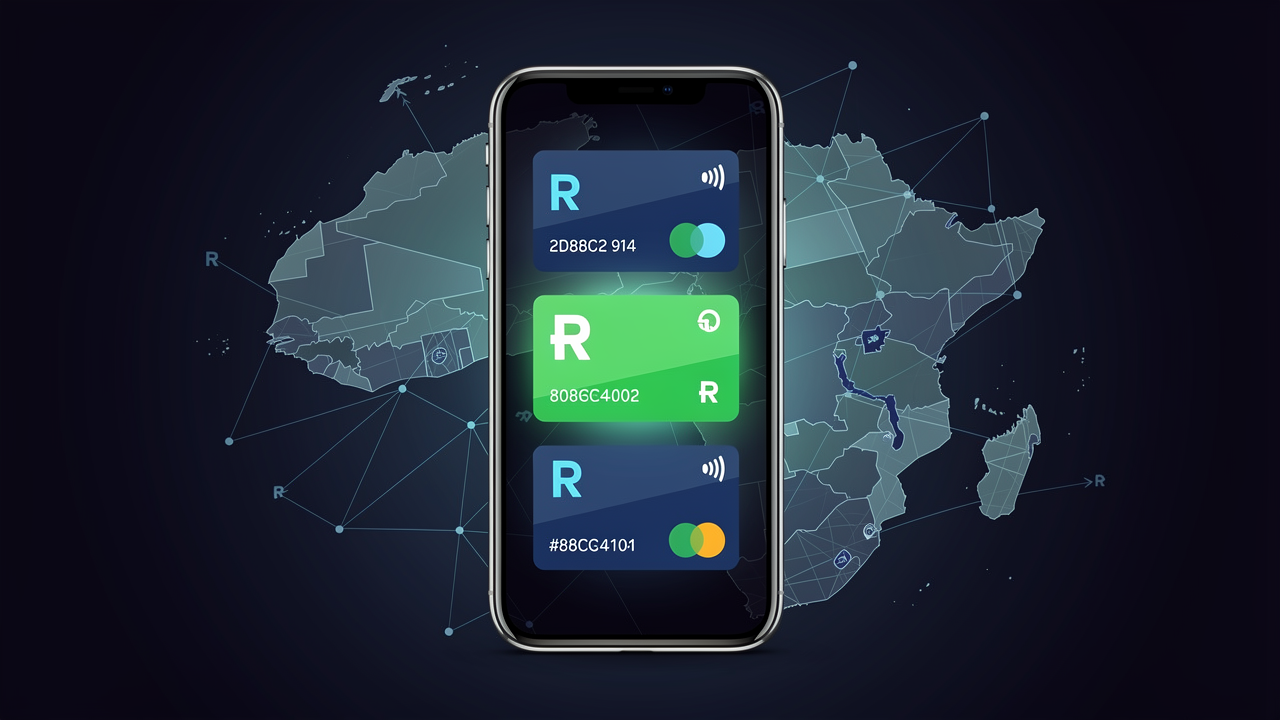
MyMoolah provides digital wallets, instant payments, disbursements, bill payments and value-added services through a single API for B2B partners. Its value-added services include airtime, data and electricity.
For a loyalty programme, this could mean using the same integration to distribute wallet value and offer airtime or electricity as reward options. For a gaming operator, it could support a more consistent payout workflow instead of routing each type of value through a separate system.
Wallet-based distribution may also reduce avoidable exceptions when it replaces a fragmented process. Whether it lowers failed payments in practice will depend on the quality of recipient data, payout rules and the organisation’s current setup.
Disbursements and VAS together
Combining disbursements with value-added services can simplify both the technical and commercial model. Partners can manage wallet services, payments and products such as airtime, data and electricity through one integration rather than building a separate connection for every service.
MyMoolah’s platform connects to banks through its sponsor bank, and to retail cash-in points, QR merchants, value-added service suppliers and cash-out PIN partners. This network supports broader distribution options for partner payout programmes.
VAS can also add choice to a loyalty or rewards proposition. However, businesses should model this separately from payout savings. Margins can vary by network and product, so no fixed incremental return should be assumed.
How to build a full-cost business case
Treat any saving figure as a business-case target, not a standard outcome. Confirm it only after comparing your current total cost with the proposed model.
Potential savings may come from four areas:
- Direct fees: Compare current per-transaction charges with MyMoolah’s published transaction fees. MyMoolah currently charges channel partners per transaction, with no monthly subscription fee.
- Integration costs: One API may require less maintenance than several separate banking and VAS connections.
- Reconciliation effort: A more unified process may reduce the number of reports that finance and operations teams must combine.
- Exception handling: Better control over recipient information and payout status may reduce retries and manual investigations.
Build the comparison using your own data. Add transaction fees, monthly charges, technology hours, reconciliation time, failed-payment costs and customer support effort. Then include any switching, migration and testing costs. The model will show whether the new total is lower — and where further process changes are needed.
Organisations with mature bank integrations should pay particular attention to switching costs. Existing systems may already be efficient, and short-term migration expenses can offset some savings.
Regulatory status and due diligence
MyMoolah is a registered Third-Party Payment Provider (TPPP) sponsored by The Standard Bank of South Africa Limited.
MyMoolah is a digital wallet and treasury platform, not a bank. It does not provide deposit insurance or Corporation for Deposit Insurance services. A major bank’s sponsorship should not be described as SARB affiliation. Partners should still complete their own legal, risk, compliance and data reviews before implementation.
The broader payment market is also moving towards more connected digital rails. SARB’s QR+ Standard 1.2 is evolving to support interoperable QR payments. While this standard is not proof of savings from any specific provider, it reflects the industry’s movement towards unified digital payment experiences. Source: SARB QR+ Standard 1.2.
Who should consider a single disbursement API?
The model may suit organisations that make frequent or high-volume payments, use several payout providers, or want to add VAS without another standalone integration. These may include:
- Gaming operators distributing customer payouts.
- Loyalty programmes issuing rewards or digital value.
- Employers making workforce-related disbursements.
- NGOs distributing programme funds.
- Stokvels and associations paying members.
- Insurers managing approved payouts.
- White-label fintechs adding wallet and VAS functions.
Getting started in five steps
- Map the current process: List every provider, integration, fee, report and manual task.
- Calculate total cost: Include technology, operations, reconciliation, failures and support — not only transaction fees.
- Define requirements: Confirm payout volumes, wallet needs, VAS products, reporting and control requirements.
- Assess migration: Compare expected savings with integration, testing and change-management costs.
- Run a measured rollout: Set clear targets for cost per successful payout, failure rates, reconciliation time and support effort.
This turns “savings” into a testable objective and gives decision-makers a clear basis for comparing a single-API platform with their current payout infrastructure.
Information current as at 5 October 2026.
Ready to offer wallet services with disbursements and VAS via a single API integration? Contact partnerships@mymoolah.africa